Senegal, rich in minerals, particularly in the Kédougou region where there are deposits of gold, iron and marble, hopes to turn these resources into an engine of growth.
We will re-evaluate and renegotiate 27 mining contracts so that Senegal becomes a key player in steel and metallurgy,
said Sonko, during his election campaign speech for the legislative elections on Sunday November 17, 2024, remarks reported by local media SENEGO. This initiative aims to guarantee an optimal economic return for the state and improve living conditions for local populations. The Prime Minister has set up a special committee to review the terms of the current agreements and ensure that they serve the country’s interests. The committee’s priority is to redefine conditions that directly benefit Senegal, while enhancing the value of its mineral resources. At present, the mining sector accounts for almost 5% of Senegal’s GDP, and consists mainly of gold, phosphates and mineral sands, which are major export products. Ousmane Sonko stressed that
renegotiating contracts will not only maximize economic benefits for Senegal, but also strengthen local control over the country’s natural resources.
By enhancing the value of its mining and water resources, Senegal will be able to make a real contribution to the global economy.By upgrading its mining resources and redefining economic partnerships, Senegal hopes to position itself as a regional leader in the responsible exploitation of its natural resources. The next steps in this policy will be crucial in determining the real impact of these renegotiations on the country’s economic and social development.
An extractive sector with growing economic spin-offs
Revenues generated by the extractive industry reached 443.27 million US dollars (275.33 billion FCFA) in 2022, according to the Extractive Industries Transparency Initiative (EITI) report. A 16% year-on-year increase was observed, due to improved taxes on income from securities and dividends paid to the State. Around 88% of these revenues are allocated to the national budget, contributing to the country’s economic and social development.
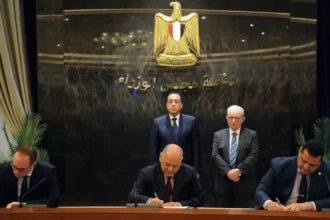
As part of this renegotiation process, the Senegalese government cancelled the contract signed with Saudi company Acwa Power for a desalination plant, considering that the terms of the agreement were no longer advantageous for the country. The authorities are currently in talks to draw up a new, fairer proposal. The extractive sector will account for 6.85% of government revenues in 2022, compared with 6.94% the previous year. Although the sector’s share of GDP has fallen slightly, from 5% in 2021 to 4.5% in 2022, extractive exports have risen, now accounting for 32.16% of the country’s total exports. These figures testify to the growing importance of the mining and energy industries for Senegal. Senegalese mining is dominated by gold and phosphoric acid, followed by mineral sands (ilmenite and zircon) and cement.