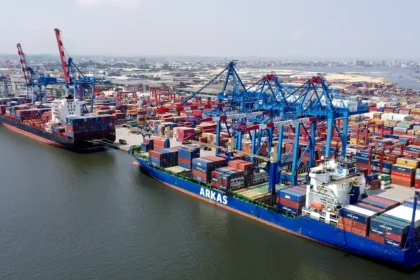
Africa’s paradox: a producer that still imports
Despite producing more than 30 million tonnes of mineral fertilizers annually more than double its consumption, Africa still imports large quantities of nitrogen and potash-based fertilizers. According to the African Development Bank, this apparent paradox is driven by structural challenges : North African nations, rich in phosphates, dominate production, while sub-Saharan Africa continues to import key inputs due to a lack of industrial capacity and infrastructure.
In the next 40 months, Africa will stop importing fertilizer. We are pursuing a very aggressive roadmap. I want to make Dangote the world’s top urea producer bigger than Qatar. Give me 40 months,
Dangote said. A key segment of Africa’s imports includes potassium chloride (KCl), or muriate of potash (MOP), an essential fertilizer largely sourced from Canada, Russia, and Belarus.
Dangote fertilizer: a thought leader
In 2021, Dangote Industries commissioned a $2.5 billion urea fertilizer plant in Lagos with an annual capacity of 3 million tonnes. The facility, leveraging Nigeria’s vast natural gas reserves, integrates ammonia and urea production in a vertically structured complex. This has transformed Nigeria into a net exporter of urea, with 300,000 tonnes shipped in Q4 2021 alone. Plans are already underway to scale capacity beyond 5.6 million tonnes surpassing QAFCO, Qatar’s state-run fertilizer giant. Such a leap would position Nigeria as a global heavyweight in the nitrogen fertilizer market.
IPO plans adjusted amid market conditions
At the Afreximbank conference, Dangote confirmed the postponement of initial public offerings (IPOs) for both Dangote Fertilizer and Dangote Refinery. Initially planned for early 2025, the fertilizer IPO is now set for Q4 2025, with the refinery’s listing pushed to 2026. These capital market operations are expected to bolster Nigeria’s NGX Stock Exchange and potentially cross-list on the London Stock Exchange. Combined, the two listings could exceed $25 billion in market capitalization. The IPO proceeds are expected to help reduce corporate debt and finance further expansion.
More Read

Competing and complementing: other industrial players
Nigeria is not alone in its push. Indorama Eleme Fertilizer & Chemicals Limited (IEFCL), also based in Nigeria, operates a 1.4 million tonne urea facility. Meanwhile, countries like Egypt, Algeria, and Morocco continue to expand their phosphate production, while newer players in Senegal, Ethiopia, and Congo explore diversification into nitrogen and potash fertilizers. One of the continent’s most closely watched projects is the Kola potash mine in the Republic of Congo, developed by Kore Potash. Slated to begin construction in January 2026, the $2.2 billion mine aims to produce 2.2 million tonnes of MOP annually. If successful, it could significantly reduce Africa’s reliance on external potash imports.
Analysts caution that while production capacity is critical, Africa’s path to fertilizer self sufficiency hinges equally on logistics and political will. Many countries lack adequate storage, port access, and transportation networks to move fertilizers efficiently to where they’re needed most especially in landlocked or rural areas. Global market dynamics also add uncertainty. Urea prices, which surged by 38% annually since 2020, have shown signs of decline in 2025. Long term viability will depend on cost competitiveness and resilience to price shocks.
Strategic importance for food security and investment
With food security at the top of Africa’s development agenda, the fertilizer sector has taken on strategic importance. Dangote’s integrated model designed for both domestic supply and export offers a roadmap for balancing economic ambition with regional needs.
Fertilizer selfsufficiency isn’t just about industry. It’s about feeding Africa,
said a senior official from the African Union. The continent’s transition from importer to exporter will not be easy. But with concerted efforts, cross-border cooperation, and private sector innovation, Africa’s soil may soon be nourished from within.