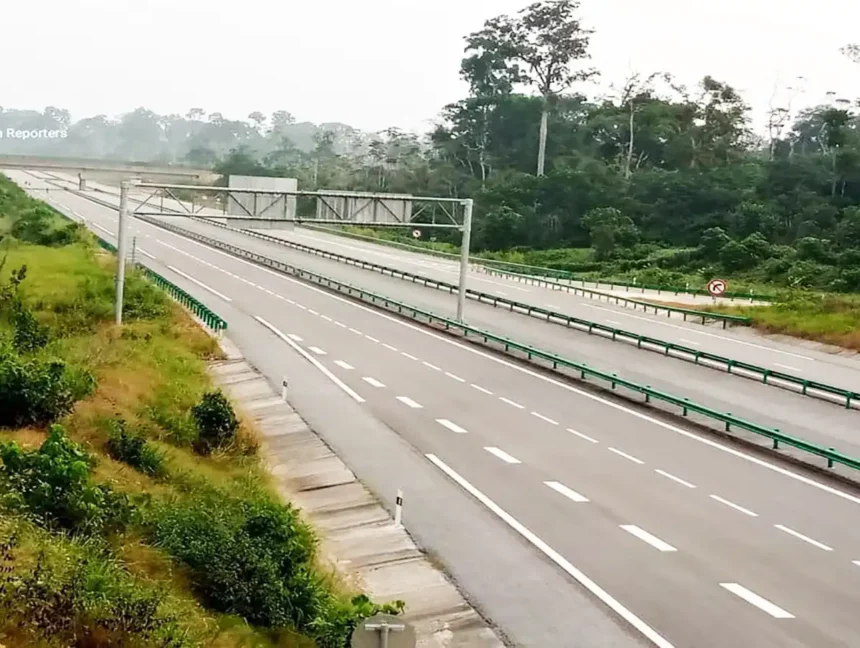


This reconstruction initiative comes within the framework of priority road infrastructure development. According to the latest MINTP data, the Douala-Bangui corridor carries nearly 40% of land trade flows between Cameroon and its Central African neighbors, making its modernization essential to reducing logistics costs and boosting regional trade.
On January 20, 2026, the Minister of Public Works, Emmanuel Nganou Djoumessi, held a consultation meeting with a World Bank delegation led by Franz Dress-Gross, Regional Director for Infrastructure. Discussions focused on the precise identification of the project, the prioritization of interventions, and the mobilization of financial resources necessary for the corridor’s rehabilitation. At the conclusion of the meeting, the World Bank announced its intention to contribute approximately USD 350 million, equivalent to nearly XAF 210 billion, emphasizing the strategic importance of MINTP within its infrastructure portfolio in Cameroon. According to the World Bank, the Douala-Bangui corridor is a priority project in Cameroon due to its direct impact on the local economy and regional trade flows.
Field identification mission
This announcement follows an identification mission conducted from January 12 to 16, 2026, which involved MINTP teams and relevant sectoral administrations. The mission included comprehensive discussions with administrative authorities in the Littoral and Centre regions, decentralized local governments, and sectoral partners. A field visit to the Douala-Yaoundé stretch of National Road No. 3 enabled officials to assess technical constraints, the current condition of infrastructure, and priority rehabilitation needs. Key challenges identified included traffic congestion around Douala, wear and tear of roads and bridges, and inadequate weigh stations for road transport regulation.
More Read
Technical options and planned interventions
The project includes several structural interventions to improve capacity and road safety: duplication of the Douala-Edea section to ease traffic flow and reduce accident risks ; onstruction of a second bridge over the Dibamba River to enhance corridor resilience against flooding and traffic pressures ; development of bypass roads around Douala and Yaounde to reduce urban congestion and facilitate goods transport ; modernization of weigh stations in Edea and Nomayos for better load control and infrastructure maintenance. The project is structured around four main components : infrastructure strengthening and road safety: upgrading roads, bridges, and signage; sustainable corridor maintenance : implementing preventive maintenance and monitoring systems; inclusive economic development: supporting SMEs along the corridor and improving local transport and facilitation of transport and trade: reducing transport time and costs for businesses and traders.
The Douala-Bangui corridor is central to Cameroon’s national development and regional integration strategy. According to the Cameroon Development Corporation (CDC), improving this axis could reduce travel time between Douala and the Central African border by approximately 25% and lower logistics costs by 15-20% for transit companies. Additionally, infrastructure modernization is considered a driver for inclusive development, creating employment opportunities in construction, road maintenance, and logistics services for local communities along the corridor.
Joint commitment to implementation
Following the consultations, MINTP and the World Bank harmonized their positions and reaffirmed their joint commitment to effectively implement the Douala-Bangui corridor rehabilitation project. This partnership illustrates Cameroon’s determination to mobilize public and private resources to improve infrastructure and strengthen economic competitiveness in the region. The rehabilitation project is therefore a transformative undertaking for Cameroon, poised to enhance road safety, streamline transport, boost cross-border trade, and support economic integration across Central Africa.