

Egypt is continuing the development of its metallurgical industry with a major project led by Egyptalum. The state-owned company plans to expand its aluminum smelter located in Nag Hammadi, in the south of the country. This industrial project, with an initial investment estimated at $900 million, is part of a strategy to ramp up national production and increase integration into global value chains.
A structuring industrial project for national production
The Nag Hammadi complex expansion project is based on the establishment of new industrial capacities designed to significantly increase primary aluminum production in Egypt. Specifically, the plan includes the construction of a production unit capable of generating approximately 300,000 tons per year, as well as an anode plant with an estimated annual capacity of 150,000 tons.
According to the data provided, integrating these additional infrastructures into the existing system will almost double Egyptalum’s current production volume. This development reflects a substantial increase in the national supply of aluminum, an industrial input widely used in several economic sectors, including construction, automotive, and energy.
A structured financial and industrial package built around international partners
The project’s implementation relies on a partnership model involving international industrial and financial players. The Trafigura Group, specializing in commodities trading, is involved at several levels in the project, notably as a minority investor, raw materials supplier, and commercial partner through long-term purchase commitments. In parallel, the investment bank EFG Hermes has been appointed as the exclusive financial advisor, tasked with structuring the project’s financing through equity financing and debt raising.
The operation also involves Metallurgical Industries Holding, an Egyptian public entity, which is participating alongside Egyptalum in the establishment of a dedicated project company. This entity will be responsible for the development, ownership, and operation of the new industrial facilities.
Contractual terms geared towards financing and securing market access
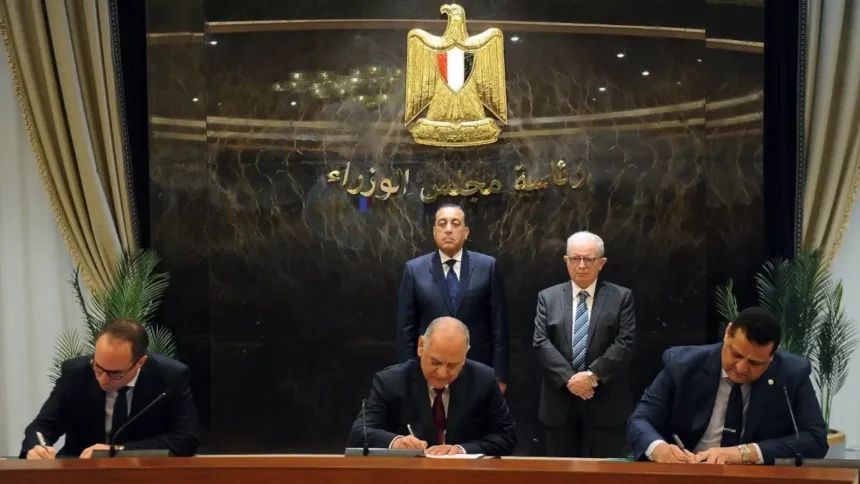
The agreement reached between the various parties is based on the signing of a term sheet defining the main parameters of the partnership. This contractual framework provides for a financial structure combining equity contributions and debt financing, as well as a minority stake for Trafigura in the project’s capital. It also includes provisions relating to the supply of raw materials necessary for production, as well as mechanisms for committing to long-term purchase volumes, designed to guarantee the sale of future production. At this stage, no information regarding sales tariffs or contract prices for aluminum has been made public.
An expected impact on the aluminum market
The projected increase in production capacity, estimated at an additional 300,000 tons per year, should lead to a strengthening of Egypt’s presence in the international aluminum market. This increase in supply is likely to boost export volumes and consolidate the country’s position in global aluminum trade. The project comes at a time of sustained demand for aluminum, particularly in the infrastructure, energy, and manufacturing sectors, giving this expansion a strategic dimension in terms of production capacity.
With an investment of $900 million, the expansion of the Nag Hammadi complex is one of the major recent industrial projects in Egypt. Structured around an international partnership and a financing package combining equity and debt, it aims to strengthen national production capacity and increase the volume of aluminum available for the market, particularly for export, within a contractual framework incorporating long-term industrial and commercial commitments.