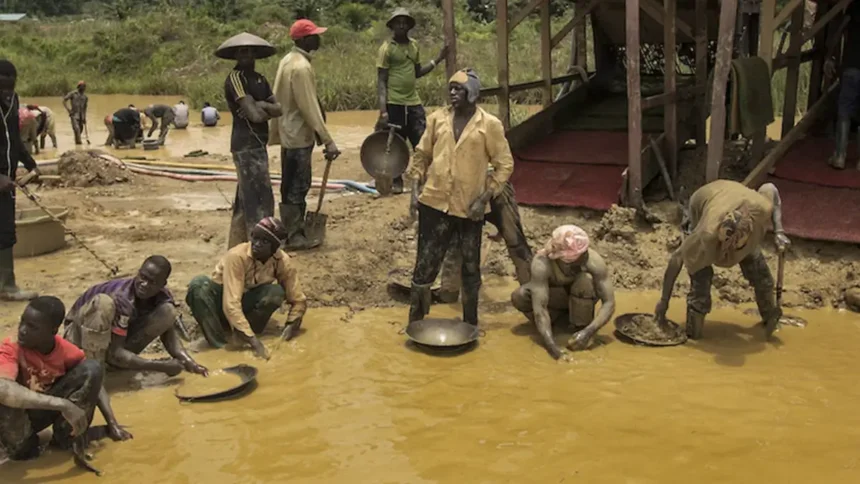


According to the latest report from the United Nations Conference on Trade and Development (UNCTAD), titled “The State of Commodity Dependence 2025”, a staggering 46 out of Africa’s 54 countries remain highly dependent on the export of raw commodities such as oil, minerals, and agricultural products. This dependence makes these countries particularly vulnerable to external shocks, such as price fluctuations on global markets or disruptions in international demand and supply chains. The report, published on July 21, 2025, defines a country as “commodity dependent” when commodities account for more than 60% of its total merchandise exports. Based on this criterion, only eight African countries have managed to diversify their export bases enough to escape this classification : Tunisia, Morocco, Egypt, Djibouti, Comoros, Mauritius, Eswatini, and Lesotho.
Regional breakdown : Central and West Africa most affected
The situation is particularly dire in Central and West Africa, where 100% of the countries are commodity-dependent. Within these regions, the intensity of dependency is particularly pronounced, with commodities accounting for 80% of export revenues in Central Africa and 75% in West Africa. In East Africa, the picture is only marginally better. Out of 18 countries, 15 (83%) rely heavily on commodity exports. The report further specifies that 11 countries on the continent are dependent on energy exports, 15 on agricultural products, and 20 on mineral resources.
Africa holds nearly half of all global commodity dependent countries
UNCTAD’s data, covering the period from 2021 to 2023 and compared to figures from 2012 to 2014, reveals that Africa alone represents 46.6% of all commodity dependent countries worldwide. The most extreme cases of dependency include South Sudan (100%), Libya (99%), Chad (99%), Angola (98%), Sudan (98%), Somalia (98%), and Algeria (96%). Despite the magnitude of this dependency, the overall value of Africa’s commodity exports has declined. Between 2012-2014 and 2021-2023, Africa’s total commodity exports fell by 5.6%, largely due to reduced energy exports from Nigeria, Angola, and Algeria.
Economic consequences: lost revenues and missed opportunities
The decline in export volumes translated into a significant drop in export revenues, which shrank by over $25 billion during the 2021–2023 period. In total, Africa’s commodity export earnings fell to $467 billion, underscoring the continent’s vulnerability to global market trends and internal structural issues. Globally, the number of commodity-dependent countries dropped only slightly from 106 (2012–2014) to 103 (2021–2023). However, 73 countries mainly in Africa and Latin America still derive over 80% of their merchandise exports from commodities.
The report notes a few success stories. Seven countries, including Comoros, Guatemala, Indonesia, Iran, Myanmar, Palau, and Trinidad and Tobago, managed to reduce their commodity export share below 60%, signaling progress toward diversification. Conversely, four new countries Antigua and Barbuda, Panama, South Africa, and Ukraine fell into commodity dependence over the same period, reflecting how quickly global disruptions can reverse diversification gains. At the global level, commodity trade accounted for 32.7% of total global merchandise trade during 2021–2023. The Asia-Oceania region dominated global commodity exports with a share of 37.1%, followed by Europe (33.7%), the Americas (22.7%), and Africa (6.6%).
UNCTAD’s warning : value addition is crucial for Africa’s future
UNCTAD warns that without significant efforts to diversify production and add value to raw materials, commodity dependent countries are unlikely to transform their natural wealth into sustainable development outcomes. The report stresses that this issue is more pressing than ever, given the rising frequency of global price shocks, geopolitical tensions, and climate related disruptions.
Value addition, including local processing, downstream manufacturing, and technology transfer, is presented as the cornerstone of Africa’s economic transformation and resilience. If pursued strategically, this could turn Africa’s current vulnerability into a foundation for long-term industrialization and job creation.
Africa’s deep rooted reliance on commodity exports remains a central challenge to the continent’s economic resilience. While global demand for raw materials remains high, African economies must accelerate diversification and focus on building value chains that retain more wealth domestically. The alternative is a continued cycle of vulnerability and missed opportunity.