

Since January 2026, the BCC has officially declared its intention to make gold a pillar of its monetary policy. An ambition made concrete on February 19th with the signing of a historic agreement with DRC Gold Trading SA, a state-owned enterprise tasked with collecting, certifying, and refining artisanal gold before selling it to the central bank. Nearly fifty years after the abandonment of the last monetary gold stocks, the country is reconnecting with a logic that the world’s major central banks have never abandoned.
BCC Governor André Wameso wasted no time setting the tone for this new year. As early as January 8, 2026, following an extraordinary meeting of the Monetary Policy Committee, he stated plainly: “We are engaged in this process and we will make it happen during 2026.” This was no improvised announcement. The strategy had already been outlined at the Makutano Talk 2025 in October, then in an interview granted to Bloomberg. The January confirmation was simply the culmination of a carefully considered reflection.
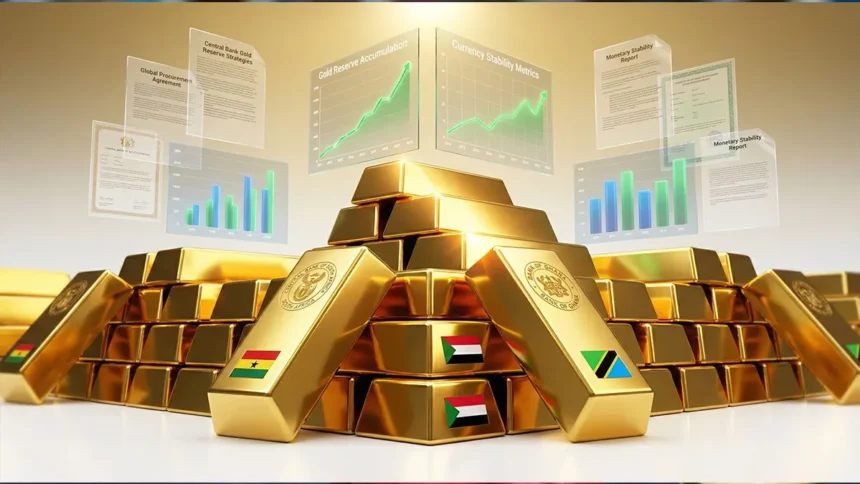
This choice fits within a global trend that the DRC now intends to join. For several years, central banks particularly those of emerging economies have been massively rebuilding their physical gold reserves. Faced with financial market instability, rising geopolitical tensions, and the gradual erosion of the dollar as a universal reserve currency, gold is reclaiming its status as the ultimate safe-haven asset. For a country like the DRC, whose economy remains largely dollarized and vulnerable to external shocks, this logic takes on a particularly urgent dimension.
The decision was accompanied by a notable monetary easing: during that same January meeting, the BCC lowered its key interest rate from 17.5% to 15%, signaling a clear willingness to support economic growth while maintaining the stability of the Congolese franc, which had already appreciated by more than 30% at the indicative rate compared to the end of 2024. The marginal lending facility rate was also reduced from 21.5% to 19%.
DRC gold trading, the central link in a chain to be built
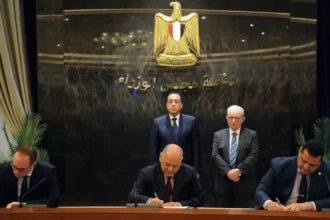
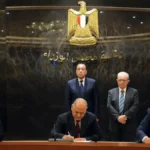
The February 19th agreement between the BCC, the Ministry of Portfolio, and DRC Gold Trading SA forms the operational core of the initiative. The mechanics are straightforward in principle, though complex in execution: DRC Gold Trading collects gold from cooperatives and artisanal miners, certifies it according to international standards, refines it, and then sells it to the Central Bank, which integrates it into its official reserves. Portfolio Minister Julie Shiku, under whose supervision the company operates, presented this partnership as “a step toward financial sovereignty” in what she described as a particularly uncertain international context.
For the BCC, becoming a direct buyer of national gold represents a profound paradigm shift. The institution is no longer simply managing foreign currencies and financial securities it is acquiring a tangible asset, rooted in the country’s productive reality. Gold, as economists consistently remind us, provides a natural hedge against inflation and crises of confidence, two variables the DRC knows all too well. What makes this initiative particularly compelling is that it reaches far beyond the question of reserves alone.
Governor Wameso made this clear: integrating artisanal gold into official circuits is also a way of addressing one of the structural causes of conflict in the eastern part of the country. “If the Central Bank starts building gold reserves using artisanal gold, this will contribute to better traceability of this mineral, which is among the causes of the conflict we are experiencing in the East,” he emphasized.
More Read
The diagnosis is well known: a significant portion of the DRC’s gold production escapes legal channels, financing armed groups that perpetuate insecurity in zones representing approximately 6% of national GDP. By channeling this production toward state-controlled pipelines, the agreement with DRC Gold Trading aims to cut off part of these illicit flows. It is an ambitious wager, one that links monetary policy and security policy in a way rarely attempted at this scale. Complementary programs such as AXIS and GoldConnect, launched by the Ministry of Mines, reinforce this architecture by structuring artisanal supply chains with innovative mechanisms including gold reserve-backed tokenization allowing the state to mobilize resources without increasing its sovereign debt.
What this bet requires to succeed
The intentions are clear, the ambitions real. But the success of this strategy will depend entirely on its implementation. Several conditions appear non-negotiable.
First, traceability must be genuine, not cosmetic. Certifying artisanal gold is a demanding exercise in areas that are often remote and still unstable. International standards exist notably the OECD Guidelines for Responsible Supply Chains but applying them effectively on the ground requires human, logistical, and financial resources that DRC Gold Trading will need to deploy swiftly. Second, coordination between the BCC, the Ministry of Mines, the Ministry of Portfolio, and security services must be rigorous and sustained. These institutions operate on sometimes divergent logics and timelines ; the country’s administrative history shows that well-intentioned agreements can stall without consistent arbitration at the highest level. Third, artisanal miners and cooperatives must find a genuine economic incentive to join formal channels. If the prices offered by DRC Gold Trading are not competitive with those of informal buyers who operate free of regulatory constraints formalization will remain a distant aspiration.
Despite these challenges, something symbolically powerful is taking shape. The DRC has long been perceived as a country that extracts enormous wealth without managing to convert it into development. Gold is the most painful illustration of this: tonnes extracted each year, persistent poverty, and conflicts that feed on that very same metal. The ambition carried by the BCC in 2026 inverts this logic. It says, in essence, that Congolese gold can become a foundation of national monetary policy, a tool for stabilizing the franc, an instrument of peace in the East, and a source of tax revenue for the state. This is not a utopia other producing countries have achieved this transformation. But it is a long-term undertaking, one that will demand as much institutional rigor as political will.
The first monetary gold stocks could be constituted this very year. For the Democratic Republic of Congo, that would be far more than a simple asset on an accounting balance sheet. It would be a sign that a country can finally hold on to what it extracts from its own soil.