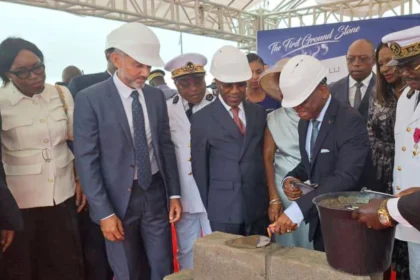


In a high-level ceremony attended by Prime Minister Joseph Dion Ngute, Cameroon marked the groundbreaking of a flagship industrial project that reflects the objectives of its National Development Strategy 2020-2030 (SND30). The project is the result of a strategic partnership between the Douala Port Authority (PAD) and Indian industrial group Arise IIP, sealed by a cooperation agreement in September 2024. The project is being implemented through the Dibamba Douala Port Logistics Platform (DDLP), a joint venture between the PAD and Arise. Its vision is to develop a fully integrated logistics and industrial ecosystem that connects the Douala port to Cameroon’s inland regions and beyond, positioning the country as a critical trade and production hub in Central Africa.
Phased development of a 500-hectare megazone
The project will unfold over a 500-hectare site along the banks of the Dibamba River and is structured into two major phases. The first phase, with an investment of CFAF 160 billion over 24 months, focuses on establishing a multimodal logistics zone covering 100 hectares. This will include modern warehouses, cargo storage facilities, and a transport network integrating road, rail, and river access. According to project developers, this initial phase alone is expected to generate around 15,000 direct and indirect jobs. The second phase, scheduled over 36 months at an estimated cost of CFAF 70 billion, will involve the development of a 350-hectare industrial zone. This area will host agro-industrial units, a dedicated timber processing area, a fishing port, and other sector-specific installations. The zoning will be flexible, with industrial plots available from 5,000 square meters, adapted to the needs of different investors.
Prioritizing local content and SME inclusion
One of the most significant aspects of the PAD-Arise agreement is its emphasis on local economic inclusion. Between 30 and 55 percent of the subcontracting opportunities across both phases will be reserved for Cameroonian companies. This clause aims to boost national expertise and ensure meaningful participation by small and medium-sized enterprises (SMEs) in the country’s industrial development. Eligible local firms will have access to tenders related to port infrastructure, logistics platform development, building construction, and utility networks such as water and electricity. To qualify, companies must demonstrate technical reliability and submit well-prepared, competitive offers. This is a vital opportunity for domestic firms to enter high-value industrial supply chains.
A business ready environment for investors
The Dibamba zone is designed to be investor friendly, offering a combination of modern infrastructure, administrative efficiency, and fiscal incentives. A single-window system will be established to ease bureaucratic processes for businesses, while a professional training center will ensure that local workers are equipped with the skills required for industrial operations. The zone’s strategic location connected by National Road N3, the Dibamba River, and the national railway will facilitate efficient movement of goods between the port and inland trade routes. Furthermore, the developers promise tax and customs advantages that will appeal to both domestic and international investors looking to tap into regional markets.
A model of sustainable industrialization
Environmental sustainability has been integrated into the master plan of the Dibamba Industrial-Port Zone. Measures to protect ecologically sensitive areas are being incorporated from the design phase onward, ensuring that development is aligned with Cameroon’s environmental commitments. Beyond its ecological safeguards, the project is also expected to make a lasting socio-economic impact. The full development is projected to create up to 500,000 direct and indirect jobs, revitalize Cameroon’s industrial base, and boost exports of locally processed goods. By decongesting the port of Douala and improving logistics efficiency, the zone will address structural challenges that have long hindered industrial growth in the region. Speaking at the inauguration ceremony, Prime Minister Joseph Dion Ngute hailed the initiative as a transformative milestone.
This is more than a project. It is a catalyst for change a symbol of our determination to move from exporting raw materials to producing and transforming locally,
he declared. With construction officially underway, the Dibamba zone is set to become a cornerstone of Cameroon’s industrial strategy, anchoring a new era of economic resilience, diversification, and global competitiveness.