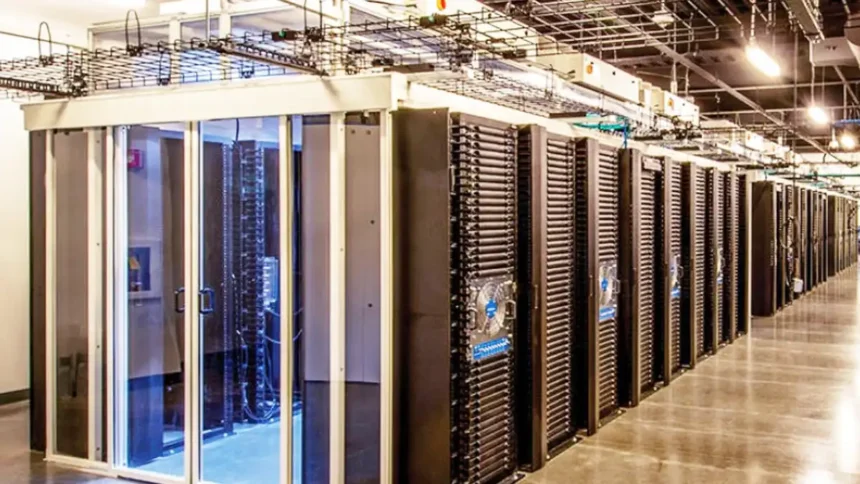


The 500 MW green data center project announced in Dakhla stands out as one of the most ambitious digital investments ever undertaken on the African continent. On its own, this capacity is comparable to, or even exceeds, the total installed data center capacity currently deployed across Africa. In a region where cumulative data center power capacity is estimated between 250 and 450 MW, Morocco’s initiative marks a clear break in scale and ambition.
By comparison, the largest data center campuses in South Africa rarely exceed 200 MW, while Morocco’s operational facilities currently average around 40 MW. The Dakhla project therefore represents a structural shift, with the potential to permanently reshape the geography of Africa’s digital infrastructure and position Morocco as a central node in regional data flows.
Dakhla’s strategic geographic and energy advantage
The choice of Dakhla is far from accidental. Located on Morocco’s Atlantic flank, the city benefits from exceptional natural conditions for hosting energy intensive infrastructure such as hyperscale data centers. The region combines one of the continent’s strongest wind potentials with high solar irradiation, enabling a power supply fully based on renewable energy. This green positioning aligns the project with Morocco’s national energy transition strategy and with the environmental standards increasingly required by global cloud and AI operators. At a time when the carbon footprint of digital infrastructure has become a decisive factor for investors and institutional clients, Dakhla’s renewable-powered model significantly enhances its international attractiveness.
The infrastructure backbone of Morocco’s AI and cloud sovereignty strategy
Beyond its electrical capacity, the Dakhla data center is designed as a hyperscale infrastructure capable of meeting rapidly growing needs in data storage, circulation and high-performance computing. The acceleration of artificial intelligence, cloud services and data-intensive digital applications has made sovereign computing capacity a strategic necessity. This ambition is consistent with the priorities reaffirmed during the recent “AI Made in Morocco” forum held in Rabat, where authorities emphasized data control and computing power as core pillars of national digital sovereignty. In this framework, the Dakhla data center constitutes the physical foundation required to support advanced AI ecosystems for both public and private sector use.
Skills, research and innovation : The Al Jazari ecosystem. The initiative extends well beyond hardware investment. Close coordination with regional authorities and the University of Dakhla has led to the creation of the Al Jazari Institute, dedicated to artificial intelligence and energy transition. The institute is intended to serve as a key driver for skills development, applied research and technological innovation. A particular focus is placed on AI applications in energy systems, in partnership with the Ministry of Energy Transition. This integration of computing infrastructure, academic research and public policy aims to create a coherent ecosystem capable of generating local value while addressing regional and continental market needs.
More Read

A regional ambition anchored in the atlantic initiative
One of the most strategic dimensions of the project lies in its regional vocation. Integrated into the Atlantic Initiative, the Dakhla data center is designed to serve African programs by offering computing and hosting capacity to Atlantic-facing countries that lack sufficient sovereign digital infrastructure. This positioning brings the project close to “data embassy” models, in which sensitive data can be hosted within secure and trusted legal and technological environments. It mirrors Morocco’s approach in other transnational infrastructure projects, such as the African Atlantic gas pipeline. In both cases, the objective is to structure strategic flows, whether energy or digital, and to strengthen regional integration through networks.
Alongside physical investments, Morocco has launched an in-depth regulatory effort to frame the development of artificial intelligence and data governance. A legal architecture known as Digital Value X.0 has been developed through extensive consultation with multiple ministries and institutions, including data protection and cybersecurity authorities. After dozens of working sessions, a draft bill has been submitted to the Government Secretariat, with the aim of parliamentary adoption before the end of the current legislative term. The proposed framework seeks to support the deployment of AI, open data and open government while ensuring secure data usage, controlled flows and the protection of digital value.
The Dakhla project resonates strongly within an African context still marked by a severe shortage of digital infrastructure. The continent hosts just over 200 data centers across around forty countries, despite representing nearly 20 percent of the world’s population. Africa’s total data center power capacity accounts for less than 1 percent of the global total and remains heavily concentrated in a handful of markets, notably South Africa, Nigeria, Kenya, Egypt and Morocco. While projections suggest African data center capacity could exceed 1 GW by 2030, driven by cloud adoption, AI and public sector digitalization, large-scale projects such as Dakhla already stand out as structural inflection points. They are likely to redefine Africa’s position within the global digital value chain.