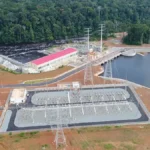
Within this continental framework, Abidjan and Accra are piloting a new development approach through cross-border agricultural value chains anchored in a planned Joint Agro-Industrial Park. Supported by the Economic Commission for Africa, the African Union Commission and ECOWAS, the initiative seeks to move both countries away from commodity dependence and toward integrated agro-industrial ecosystems.
Cocoa and rice as catalysts for regional transformation
The project, currently at the pre-feasibility stage, focuses on cocoa and rice, two commodities with strong economic and social impact. Cocoa remains West Africa’s flagship export crop, while rice is a staple food that plays a central role in regional food security. The objective is to go beyond raw exports by building complete value chains that connect production, industrial processing and regional distribution. Early assessments have revealed persistent challenges, including high post-harvest losses, limited local processing capacity, fragmented regulatory frameworks and weak cross-border logistics. At the same time, they highlight substantial opportunities for value creation, industrial employment and private-sector participation. According to Janet Edeme, Acting Head of Agriculture at the African Union Commission, the joint agro-industrial park is one of the flagship pillars of Agenda 2063, designed to structurally transform agricultural economies through integrated cross-border agro-industrial ecosystems.
A joint agro-industrial park to reshape the Ivorian-Ghanaian corridor
The planned Ivory Coast-Ghana Joint agro-industrial park is conceived as more than a traditional industrial zone. It is designed to function as a regional agro-processing hub, a logistics and trade platform, a climate-resilient investment corridor and a catalyst for private capital. Its financial architecture is linked to the African Agro-Parks Program and a Green Climate Fund pipeline aimed at mobilizing concessional finance while attracting private investment into climate-smart agriculture. Additional commodities are under consideration to broaden the park’s economic base, strengthen its bankability and address wider food security needs. The initiative also aims to reduce post-harvest losses, improve cross-border trade flows and accelerate agro-industrial development along the Ivorian-Ghanaian frontier.
More Read

In Ghana, agricultural transformation is increasingly feeding into a growing manufacturing ecosystem. The country is expanding exports of processed food products, beverages, refined vegetable oils and packaged consumer goods. This momentum is driven by industrial policies that promote local sourcing, most notably the One District, One Factory program, which seeks to decentralize manufacturing and stimulate regional production. As a result, Ghanaian brands are gaining visibility across West Africa in agri-food products, textiles and household goods. While Ghana’s industrial base is still developing compared with larger emerging exporters, the country is steadily positioning itself as a consumer-goods export platform for ECOWAS markets, supported by improving infrastructure and a more diversified manufacturing sector.
Ivory Coast’s shift from agricultural champion to agro-industrial powerhouse
Ivory Coast, the world’s leading cocoa producer, is accelerating its move up the value chain. The country has invested heavily in refining and processing facilities that now produce chocolate, cocoa butter, edible oils, soaps and fortified foods. These products are increasingly supplied to neighboring West African markets, supported by the efficiency of the Port of Abidjan, which has become a major regional hub for processed consumer goods. Agro-industry is one of seven priority clusters under Ivory Coast’s 2020-2025 National Development Plan, reflecting the government’s ambition to build domestic value chains capable of sustaining industrial growth. This strategy is allowing Abidjan to capture a growing share of agricultural value while gradually reducing reliance on raw commodity exports.
AfCFTA as the backbone of integration
For Joan Kagwanja, Chief of Land and Agriculture at the Economic Commission for Africa, AfCFTA represents a historic lever for transformation. She emphasizes that AfCFTA is not merely a trade agreement but a tool to dismantle colonial economic structures, foster sustainable development and deliver on Africa’s Agenda 2063. In this context, regional agricultural value chains are increasingly viewed as essential instruments for food sovereignty, industrial job creation and deeper economic integration. ECOWAS is reinforcing this momentum through its revised regional industrial policy, which places agri-food among its priority sectors. The Ivory Coast-Ghana initiative aligns closely with these regional objectives, combining trade facilitation with industrial development.
The joint agro-industrial project between Ivory Coast and Ghana is expected to serve as a pilot for the wider West African region. If successful, the model could be replicated across ECOWAS member states, enabling coordinated agricultural industrialization, the development of regional agro-industrial corridors, reduced dependence on food imports and stronger intra-African trade. Beyond infrastructure, the initiative represents a deeper paradigm shift, moving from export-oriented agriculture toward integrated agro-industrial economies capable of generating inclusive growth.
For investors, this transformation creates multiple entry points across agro-processing, regional logistics, packaging and cold-chain infrastructure, green industrial facilities and climate finance. Backed by continental institutions and climate-finance mechanisms, the Ivory Coast-Ghana Joint Agro-Industrial Park has the potential to emerge as one of West Africa’s most structurally significant investment platforms over the coming decade.