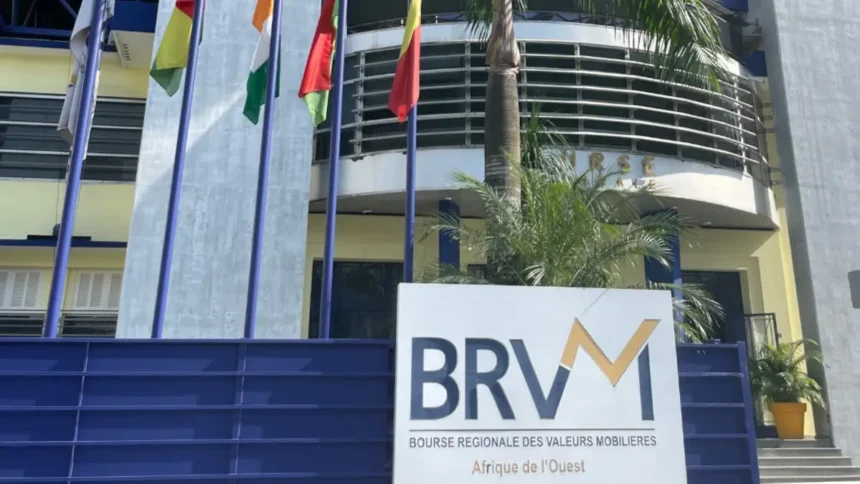


Performance across indices, however, was far from uniform. The BRVM Principal Index surged 57.59%, driven largely by a sharp re-rating of previously undervalued stocks, while the Agricultural Index jumped 73.35%, reflecting improved pricing dynamics and volumes across agricultural value chains. The BRVM Prestige and BRVM 30 indices also posted solid gains of 25.61% and 19.82%, respectively. Not all sectors benefited from this momentum. Telecommunications declined by 5.09%, while Utilities collapsed by 86.14%, underscoring the sharp dispersion of returns within the market. On the final trading session of 2025, December 31, a total of 239,272 shares were exchanged for a value of CFA 896.7 million, marking a relatively quiet year-end after an otherwise active trading year. Total market capitalization stood at CFA 13.3 trillion.
Dividends on the BRVM : a full-fledged income strategy. On the BRVM, dividends are not a secondary feature of equity investing. They represent a core pillar of long-term value creation, particularly for income-oriented investors. Dividend season remains one of the most closely watched periods of the year, as it provides tangible evidence of companies’ ability to convert accounting profits into actual cash returns. An analysis of companies that have paid dividends at least once over the past three fiscal years reveals a strong sectoral concentration. Most dividends on the BRVM originate from three key segments : banks, telecommunications and consumer goods. This concentration reflects the dominance of business models capable of generating stable and recurring cash flows.
Banks : the structural backbone of dividend income
The banking sector remains the primary source of dividend income on the regional exchange. Financial institutions, particularly those within the Bank of Africa network and several major regional banks, have demonstrated remarkable consistency in rewarding shareholders. Over recent years, these banks have maintained dividend payout ratios typically ranging from 45% to over 90%, despite regulatory constraints and macroeconomic volatility. This consistency is underpinned by mature business models, structurally strong credit demand across UEMOA economies and prudent capital management. For investors, banks offer visibility and predictability in dividend flows, making them the backbone of income-focused portfolios on the BRVM.
Recommanded

Telecommunications : few stocks, exceptional cash generation. The telecommunications sector is narrow on the BRVM, yet its contribution to dividends is disproportionately large. Sonatel and Orange Ivory Coast dominate the segment and exhibit particularly strong financial fundamentals. Their scale, high margins and recurring revenues from subscriptions and digital services enable them to generate substantial and predictable cash flows. These companies have historically adopted disciplined dividend policies, often distributing a very large share of profits, sometimes exceeding 100% of net income. While such payout levels may appear unusual, they primarily reflect balance sheet strength and accumulated cash reserves. Despite recent underperformance in share prices, telecom stocks remain premium income assets heading into 2026.
Consumer goods and agribusiness : balancing resilience and cyclicality
Consumer staples and agribusiness companies occupy a middle ground within the BRVM dividend ecosystem. Firms such as Nestlé Ivory Coast, Palm Ivory Coast and SAPH operate in sectors closely linked to household purchasing power and agricultural conditions, making their earnings more cyclical. However, the essential nature of their products provides a degree of resilience even during economic slowdowns. After several years of margin pressure, the improvement in earnings observed in 2024 and early 2025 has significantly enhanced visibility for 2026. These stocks therefore serve as strategic complements to banks and telecoms in diversified income portfolios.
Dividends in 2026 : what current estimates suggest. Based on trailing twelve-month (TTM) earnings and historical payout ratios, several companies appear well positioned to deliver substantial dividends in 2026. These figures are estimates, not official announcements, but they provide a useful analytical framework ahead of formal corporate disclosures. Some banks stand out for their aggressive payout policies. BICICI could distribute an estimated CFA 1,567.6 per share, maintaining a payout ratio close to 94%, while BIIC could deliver around CFA 448.1 per share. SITAB (STBC) appears particularly striking on paper, with an estimated dividend of CFA 2,751.9 per share and a payout ratio above 90%.
In telecommunications, Sonatel remains the benchmark, with an estimated dividend of CFA 1,907.2 per share, while Orange Ivory Coast could distribute around CFA 1,036.8 per share. Total Ivory Coast and Nestlé Ivory Coast illustrate two contrasting dividend philosophies : the former with an aggressive payout approach, the latter with a highly conservative strategy. Meanwhile, the Bank of Africa group offers regional diversification, with dividend levels varying across countries. It is equally important to note that some companies, despite solid earnings, are likely to retain profits to finance growth or strengthen balance sheets. A lack of dividends should therefore not automatically be interpreted as weak performance, but rather as a deliberate capital allocation choice.
Beyond dividends: which stocks deserve attention in 2026 ?
Dividend income alone is not sufficient; fundamentals remain critical. Sitab Ivory Coast stands out as one of the most compelling investment cases on the market. Over the past twelve months, the company generated nearly CFA 255 billion in revenue, up close to 40%, with a net margin of around 21%. The stock trades at an attractive earnings multiple and offers one of the highest dividend yields on the exchange, reflecting the efficiency of a mature industrial model. Ecobank Transnational also commands attention due to its pronounced undervaluation. Despite strong earnings growth, high return on equity and a solid net cash position, the stock trades at an exceptionally low earnings multiple by banking standards. This disconnect between valuation and fundamentals positions ETIT as one of the most discounted large-cap banking stocks on the BRVM. Conversely, caution is warranted for certain names. Unilever Ivory Coast appears significantly overvalued relative to its operational performance, while Setao, despite a sharp rise in its share price, continues to post losses and has not paid dividends for several years. In these cases, price momentum seems driven more by speculation than by underlying economic reality.