In thirteen African countries, crude oil is the primary export. Major producers such as Nigeria, Angola, Algeria, Libya, Congo, and Equatorial Guinea hold a strong position in the global oil market thanks to their maritime export volumes. This oil income provides substantial national revenues but creates deep vulnerability: price volatility, exposure to geopolitical shocks, and the constraints of export infrastructure.
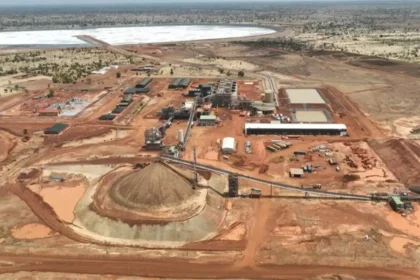
Sixteen African countries rely heavily on gold for their export revenues. Ghana, Mali, Burkina Faso, Tanzania, South Africa and Sudan are among the continent’s leading producers. Gold mining generates foreign exchange, supports the development of transport and energy infrastructures, and attracts investment. In many regions, gold remains the economic backbone and the principal driver of financial stability.
Facing the risks linked to oil and mineral dependence, several African nations have turned to agriculture as a means of diversifying their exports. Ethiopia generates more than USD 130 million in coffee exports in a single month. Kenya continues to earn significant revenue from tea. Ivory Coast and Ghana remain the world leaders in cocoa production. In Guinea-Bissau, cashew nuts dominate export flows, while Malawi relies heavily on tobacco. These agricultural pillars contribute not only to export earnings but also to millions of rural jobs, strengthening social and economic resilience.
Strategic minerals: africa at the center of the global energy transition
The African continent supplies minerals crucial to global supply chains. Copper extracted in Zambia, Namibia, and the Democratic Republic of Congo feeds the electrical industry. Diamonds produced in Botswana and Lesotho provide important foreign exchange. Titanium from Sierra Leone and aluminum from Mozambique are essential for industrial manufacturing. In the context of rising renewable energy production, electric vehicles and green technologies, these minerals are becoming increasingly strategic. Beyond major commodities, several African nations are developing high-value niche export sectors. Madagascar is one of the world’s leading exporters of vanilla. The Comoros supply cloves. Eswatini has built a reputation for high-quality glass products. Liberia exports lightweight boats, while São Tomé and Príncipe has positioned turbines among its export items. These specialized sectors, although limited in volume, demonstrate the continent’s potential for diversification and value-added production.
A continent still deeply dependent on primary commodities
Recent reports of CNUCED show that 46 out of 54 African countries remain dependent on primary commodities, which account for more than 60% of their export revenues. Only nine countries escape this dependency: Tunisia, Morocco, Egypt, Djibouti, Comoros, Mauritius, Eswatini and Lesotho. In Central and West Africa, every country is affected. In East Africa, 15 out of 18 countries or 83% are commodity-dependent. Some states show extreme vulnerability: South Sudan (100%), Libya (99%), Chad (99%), Angola (98%), Sudan (98%), Somalia (98%), and Algeria (96%).
Between 2012 -2014 and 2021-2023, African commodity exports fell by 5.6%. Over the same period, export revenues declined by USD 25 billion, reaching USD 467 billion. This decline is largely due to falling energy exports from Nigeria, Angola and Algeria. Globally, the number of commodity-dependent countries decreased slightly from 106 to 103. However, the depth of dependency remains severe. Seventy-three countries worldwide mainly in Africa and South America rely on commodities for more than 80% of their export revenues (up from 74 previously). Of 143 developing countries, 95 remain commodity-dependent, compared with only eight high-income economies. The global trade in commodities represented 32.7% of all merchandise traded between 2021 and 2023. Africa accounted for only 6.6% of global commodity exports during that period, compared with 37.1% for Asia-Oceania, 33.7% for Europe, and 22.7% for the Americas.
More Read

Growing trade relations between Africa and Türkiye
Trade between Africa and Türkiye is particularly strong around three key products: gold, cocoa and palm oil. Gold mainly from Ghana, Mali and South Africa supports Türkiye’s jewelry and financial sectors. Cocoa from Ivory Coast and Ghana feeds its confectionery and chocolate industries. Palm oil from Nigeria and Ghana supplies Turkish agro-food and cosmetics industries. These flows highlight the complementarity between African resources and international industrial demand.
Industrialisation and the rise of local manufacturing
Despite the dominance of raw commodities, several African countries are moving toward industrialisation. Textiles, auto parts, electronics, agro-industry, processed plastics and consumer goods are emerging across the continent. South Africa, Egypt and Kenya lead this transformation, supported by a young workforce, expanding infrastructure, industrial zones, trade agreements and a rising ambition to create local value. This shift marks a strategic response to the vulnerabilities of commodity dependence.
Africa remains deeply dependent on natural resources oil, minerals and agricultural commodities but the landscape is evolving. Export-oriented agriculture, strategic minerals, niche sectors and early-stage manufacturing industries are reshaping the continent’s economic trajectory. For investors, traders and logistics actors, this transformation offers major opportunities while requiring a clear understanding of structural risks. Africa remains a central pillar of global commodity markets, even as it works to build a more diversified and resilient future.